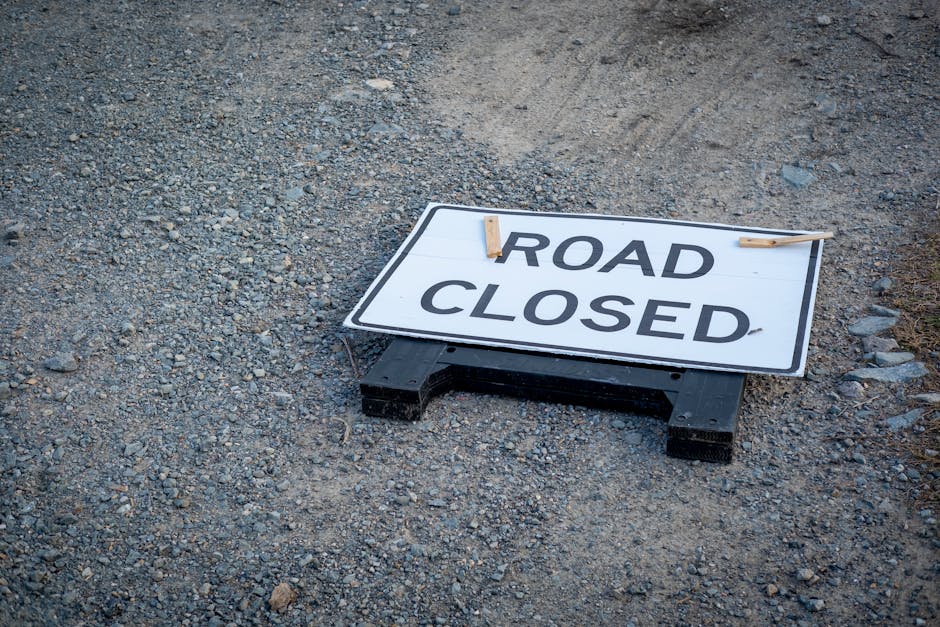
Do You Need a Kingston Council Road Closure for Large Moves?

If you are planning a big house move, office relocation, or a heavy furniture delivery in Kingston, one question tends to appear quite late in the process: do you need a Kingston Council road closure for large moves? It sounds like a niche admin detail, but in the wrong situation it can be the thing that stops your move from turning into a messy, slow, awkward day with a queue of unhappy drivers behind you.
The short answer is: sometimes, yes - but not every large move needs a formal road closure. A lot depends on where the vehicle will park, how much space is available, whether the road is narrow or busy, and whether the move will block traffic or create a safety issue. In practice, the question is less about size alone and more about impact on the street.
In this guide, we will break down when a road closure may be needed, how the process usually works, what council and traffic considerations matter, and how to plan a large move without last-minute panic. You will also find a practical checklist, a comparison table, and a few real-world examples that make the decision much easier to judge. Let's keep it plain-English and useful. No fluff.
Why Do You Need a Kingston Council Road Closure for Large Moves? Matters
Large moves create a surprisingly specific kind of disruption. It is not just about having a big lorry. It is about whether that lorry can stop safely, unload without blocking access, and do the job without creating a hazard for pedestrians, cyclists, neighbours, or passing traffic.
In a place like Kingston, that matters even more because local roads can vary a lot. One street may have enough width for a van to sit neatly at the kerb. Another may be tight, lined with parked cars, or too busy for a vehicle to sit there with doors open and boxes coming out one by one. Truth be told, the move itself is often the easy part. The street logistics are what trip people up.
A road closure, or some other form of temporary traffic management, may be worth considering if the move will:
- block both lanes or leave too little room for passing traffic
- need extended loading time for a large van, moving truck, or multiple vehicles
- involve awkward access on a narrow residential road
- require a skip, lift, crane, or bulky loading equipment
- affect a busy time of day when traffic builds quickly
- reduce visibility for drivers or pedestrians
What you are really doing is managing risk. Not making life complicated for the sake of it. A short closure or controlled parking arrangement can help you avoid damage, delays, complaints, and the kind of awkward moment where a driver is trying to reverse while someone is holding a mirror and saying, "I do hope this is moving soon."
That said, many large moves do not need a full closure. If the vehicle can load from private land, a driveway, a forecourt, or a wide enough side street without causing obstruction, a closure may be unnecessary. The key is to assess the actual space, not just the size of the move.
How Do You Need a Kingston Council Road Closure for Large Moves? Works
The process is usually a matter of judging whether your move needs formal permission, traffic control, or a simpler parking and loading arrangement. The council may treat a road closure differently from a parking suspension, a temporary traffic order, or other street-use permissions, so it helps to understand the distinction.
Here is the simple version:
- Assess the street - measure the space, think about access, and consider traffic flow.
- Identify the obstruction risk - ask whether a vehicle, ramp, or team of movers will stop traffic or block a route.
- Plan the move method - for example, a man and van service, a larger moving truck, or removal truck hire.
- Check timing - early morning, school-run periods, rush hour, and weekends can all change the risk profile.
- Confirm permissions early - if the move could block access, plan ahead rather than hoping it will be fine on the day.
- Put safety first - cones, banksmen, clear walkways, and sensible loading discipline go a long way.
In many cases, the moving company will help you decide whether a council road closure is actually needed or whether a simpler arrangement will work. If you are arranging a bigger domestic move, services such as home moves or house removalists are often planned around access, parking, and loading space from the start, which saves a lot of scrambling later.
If the move is business-related, the same logic applies - just with more pressure. Office blocks, shared entrances, and delivery bays often need tighter planning, which is why commercial moves and office relocation services usually need more detailed scheduling than a straightforward small household job.
Key Benefits and Practical Advantages
People often think a road closure is just red tape. Sometimes it is. But in the right situation, it is also one of the most practical tools you can have. Done properly, it can make the entire move calmer and safer.
- Safer loading and unloading - fewer moving parts in the road means fewer accidents and less pressure on the crew.
- Less stress for neighbours and drivers - controlled access is better than an improvised blockage with everyone guessing what happens next.
- Better time management - a move with clear access usually runs more smoothly and may finish faster.
- Reduced risk of damage - both to your items and to parked cars, walls, or street furniture.
- Cleaner communication - when a closure or traffic plan is in place, everyone knows what to expect.
There is also a quieter benefit that people only notice afterwards: the move feels more organised. You are not trying to make decisions while carrying a sofa through a gap that is clearly too small. That kind of improvisation is where stress starts to multiply.
If you are coordinating packing at the same time, a good team can make a surprising difference. Packing and unpacking services often help shorten the loading window, which can reduce the chance that you need anything more formal than a brief loading arrangement.
Who This Is For and When It Makes Sense
This is not just for huge commercial projects. A road closure question can come up in all sorts of ordinary situations. The deciding factor is whether your move is likely to interfere with normal road use.
You may need to look seriously at council permission if you are:
- moving from a terraced house on a narrow road
- relocating from a flat with awkward stair access and no private driveway
- bringing in a very large volume of furniture or appliances
- using a moving truck that will need to sit on the carriageway for longer than a few minutes
- moving office equipment, filing cabinets, or heavier commercial stock
- arranging same-day moves that need multiple trips
- using larger access equipment for bulky or fragile items
A lot of people start with a small-service assumption - "It is only a few items" - and then the reality arrives: three wardrobes, two fridges, a table that refuses to turn the corner, and a road that is already half-parked-up by 8:30 a.m. Easy mistake. Very common, too.
If your move is modest and the vehicle can stop safely without creating a blockage, then a full road closure may be overkill. In that case, a smaller solution such as a van-based move, careful parking, or localised loading plan may be more sensible. Options like man with van support can be a neat fit for lighter moves where the street impact is limited.
Step-by-Step Guidance
If you want a practical way to think about the whole thing, use this process. It keeps the decision grounded and helps you avoid last-minute surprises.
1. Walk the route, not just the room
Stand outside and look at the street with fresh eyes. Where will the vehicle stop? Is there enough width for pedestrians to pass safely? Are there nearby bends, junctions, dropped kerbs, or driveways that could make stopping a problem?
2. Estimate the loading time honestly
People often underestimate loading time, especially when furniture needs dismantling or items are scattered between rooms. If the road access is tight, even a short delay can become a bigger issue because the vehicle stays in place longer.
3. Match the vehicle to the job
A smaller van may be enough for a compact move and much easier to position. A larger truck may be better for volume but may increase access pressure. The right choice depends on both payload and street conditions. If you are unsure, compare the options with a provider offering moving truck support or removal truck hire.
4. Check whether parking alone solves it
Sometimes all you need is a reserved space or a short loading window. If your move can be done without blocking the road for long, a full closure may not be necessary. That is the sensible middle ground in many cases.
5. Confirm the plan with the moving team
Tell the movers exactly what the street looks like. Mention stair access, rear entrances, parking restrictions, and any local pinch points. A good moving team will ask those questions anyway, but it helps when you come prepared.
6. Build in buffer time
Moves rarely go perfectly to the minute. Someone cannot find the keys. A lift is slow. A table is heavier than it looked. Leave space for that. You will feel calmer for it, honestly.
Expert Tips for Better Results
Here is where experience really helps. Small decisions early on can save a lot of hassle later.
- Choose the earliest practical slot if your road is busier later in the day. Streets often get tighter and more chaotic as the day goes on.
- Keep the loading point as close as possible to the property. Every extra metre matters when carrying bulky furniture.
- Label items clearly so the crew can load faster and unload in the right order.
- Separate essential items like documents, chargers, medication, keys, and tea-making bits. Yes, the kettle matters.
- Use a proper packing plan if you have fragile or awkward items. Good packing shortens the time spent standing around with a box in the rain.
- Check whether furniture needs dismantling before moving day. It can change the vehicle size and access plan you need.
A small but useful tip: if your road is narrow, ask someone to be available at the start of the move to help guide the driver into position. It sounds basic, but it avoids those silent, cautious manoeuvres where everyone is trying to read each other's minds. Which never works, by the way.
For businesses, planning matters just as much. Coordinating a move outside opening hours or during quieter building access periods can make a big difference, especially for commercial moves and office relocations. Less foot traffic usually means less stress.
Common Mistakes to Avoid
Most moving problems around road access come from a few predictable mistakes. Avoid these and you are already ahead.
- Assuming a closure is automatically required just because the move is large.
- Leaving permission questions too late and discovering the street plan does not work on the day.
- Ignoring the size of the vehicle and focusing only on the number of boxes.
- Forgetting about nearby parking pressure that can make loading much harder.
- Not checking for timed restrictions such as school-run traffic, loading limits, or resident parking complications.
- Trying to unload in a rushed, improvised way because the plan was never fully thought through.
One of the biggest errors, to be fair, is treating the street like a background detail. It is not background. It is part of the move. If the road is wrong, the whole day feels wrong. Simple as that.
Tools, Resources and Recommendations
You do not need a complicated toolkit, but a few practical items help enormously when planning a large move in a tight area.
- Measuring tape for checking vehicle access, doorway widths, and furniture dimensions
- Notebook or checklist to track access notes, timings, and key contact details
- Phone camera for photographing the street layout, parking bay, or loading point
- Labels and markers for faster loading and safer unloading
- Protective materials like blankets, wrap, and floor coverings
- Clear communication plan for the mover, the building, and the residents involved
There are also a few site-level pages worth checking if you are comparing moving support, safety, or administration before booking. For example, pricing and quotes can help set expectations early, while insurance and safety is worth reading if you are moving valuable items or want reassurance about handling standards.
If sustainability matters to you - and it should, a bit - look at recycling and sustainability for ways to reduce waste during the move. Old packaging, unwanted furniture, and repeated trips can all be handled more thoughtfully with a bit of planning.
Law, Compliance, Standards, or Best Practice
When a move affects a public road, the main principle is straightforward: you should not create avoidable danger or obstruction. That is the baseline. Exact council permissions, traffic management requirements, and temporary traffic arrangements can vary depending on location, street layout, timing, and the nature of the move, so it is wise to confirm details before relying on assumptions.
In UK practice, councils generally expect people and contractors to manage loading, parking, and access responsibly. If the move is likely to block a road, interfere with passing traffic, or create risk for pedestrians, then formal permission or traffic control may be needed. If the move is smaller and can be carried out safely without significant disruption, a simpler arrangement may be enough.
Best practice usually includes:
- planning access in advance
- avoiding unsafe unloading on busy roads
- keeping emergency access in mind
- using suitable vehicles for the street conditions
- communicating clearly with neighbours or building managers where needed
- following the moving company's safety procedures
If you are hiring professionals, it is sensible to choose a team that treats safety seriously and can explain their process clearly. A move should not depend on guesswork. It should depend on a proper plan.
Options, Methods, or Comparison Table
When you are deciding whether you need a road closure, it helps to compare the main approaches side by side. Different moves need different levels of control.
| Approach | Best for | Pros | Limitations |
|---|---|---|---|
| No formal restriction | Short, low-impact moves with easy access | Fast, simple, low admin | Only works if the vehicle can stop safely without causing obstruction |
| Managed loading / reserved parking | Medium moves where access is tight but still workable | Practical, usually enough for many domestic moves | Needs planning and confirmation; may still be tight on busy streets |
| Temporary road closure or traffic control | Large moves, blocked access, narrow roads, or safety-sensitive loading | Best control, safer for people and vehicles | More planning and potentially more formal steps |
For many Kingston moves, the middle option is the sweet spot. A full closure is only the right answer when the street conditions really demand it. If not, it can be more admin than benefit.
Case Study or Real-World Example
A typical example helps here. Imagine a family moving out of a terraced house on a narrow Kingston street. There is no driveway, both sides of the road are heavily parked, and the largest piece of furniture is a long corner sofa that needs two people to carry and rotate carefully.
At first glance, they assume they need a road closure. But after checking the street more closely, the team spots a better plan: use a smaller vehicle, schedule the loading for early morning, reserve a nearby parking space where possible, and keep the unloading window tight by packing everything in advance. No full closure is needed. The street stays passable, the move runs smoothly, and the family avoids extra cost and delay.
Now change one detail. Suppose that same move also involves a large delivery lorry, a fragile glass cabinet, and a loading point that sits awkwardly across a narrow bend. In that version, a more formal road-use arrangement suddenly makes a lot more sense. Same house, different access reality.
That is the real lesson. The answer is not based on move size alone. It is based on how the move fits the street.
Practical Checklist
Use this checklist before move day. It keeps the decision grounded and helps you spot the obvious problems early.
- Have I checked whether the vehicle can stop safely at the property?
- Will the move block traffic, pedestrians, or neighbouring access?
- Is the road narrow, busy, or awkwardly parked?
- Do I know roughly how long loading will take?
- Is the vehicle size appropriate for the street conditions?
- Have I spoken to the moving team about access and timing?
- Do I need reserved parking, a loading plan, or a more formal road arrangement?
- Are fragile or bulky items packed and ready to go?
- Have I checked for early-morning, school-run, or rush-hour pressure?
- Is there a backup plan if the street is busier than expected?
If you can answer those confidently, you are probably in a strong position. If not, pause and refine the plan. That is not being cautious for the sake of it. It is just smart.
If you are still comparing move types, service levels, or vehicle sizes, it can help to explore the broader moving options available, including home moves, man and van, and office relocation services. The right fit often becomes clearer when you compare access, volume, and timing together.
Conclusion
So, do you need a Kingston Council road closure for large moves? Sometimes - but not always. The real question is whether your move will block traffic, reduce safety, or create a road access problem that a simple loading plan cannot solve.
For many moves, careful timing, the right vehicle, and a sensible loading arrangement are enough. For others, especially on narrow or busy roads, a more formal closure or traffic control arrangement may be the safest and most practical answer. The sooner you assess that honestly, the easier the whole day becomes.
Get the access right, and the move feels manageable. Get it wrong, and even a small job can feel like a hassle from start to finish. Better to sort it now, while the kettle is still warm and the boxes are still labelled.
Get a free quote today and see how much you can save.
Frequently Asked Questions
Do all large moves in Kingston need a road closure?
No. A large move only needs a road closure if it is likely to block traffic, create a safety issue, or require more controlled access than a normal loading arrangement can provide.
What is the difference between a road closure and parking suspension?
A road closure restricts access to the road itself, while a parking suspension usually limits parking in a specific area. They solve different problems, and the right one depends on the street layout and the type of move.
How do I know if my street is too narrow for a move?
If a vehicle would leave too little room for passing traffic, pedestrians, or safe loading, the street may be too narrow for a simple unload. A quick site check and photo review usually make this much clearer.
Can a moving company handle the council process for me?
Sometimes they can help guide the process or advise on what is needed, but it is best to confirm exactly who is responsible before the move. That way nothing gets assumed and then forgotten.
Do I need council permission for a van parked outside my house?
Not necessarily. If the van is parked safely and does not cause obstruction, formal permission may not be required. The issue is not the van itself, but whether it interferes with road use.
Is a road closure more likely for office moves?
Often, yes, because office relocations can involve larger volumes, multiple vehicles, heavier equipment, and tighter timing. Still, each site should be judged on its own access conditions.
What if my move takes longer than planned?
That is exactly why a buffer matters. If access is tight and time starts running over, the risk of disruption increases. Build in more time than you think you need, especially for bulky items.
Can I just use a man and van service instead?
For smaller or lighter moves, a man with van or man and van service may be enough and easier to manage on a busy street. It depends on volume, access, and how much needs carrying.
What should I tell the movers before moving day?
Tell them about road width, parking restrictions, stairs, lifts, access points, large items, and any concerns about timing. The more accurate the details, the better the plan.
Is a council road closure always worth the cost?
Not always. If your move can be done safely without it, a simpler loading arrangement may be more sensible. If the road really is the bottleneck, though, the extra control can save time and stress.
What is the safest option for a very heavy furniture move?
For heavy or awkward items, the safest option is usually the one that gives the crew the clearest access and least disruption. That may mean larger vehicle support, careful packing, or in some cases a more formal road arrangement.
Who can I speak to if I'm unsure what I need?
If you are unsure, speak with a removals team that understands Kingston access conditions and can help you judge the best setup. If you want to discuss a move in more detail, you can start with contact us.
And if you would like to learn more about the company behind the service, visit about us for a quick overview of how the team works. It is often reassuring to know who is actually going to turn up on the day.
For payment confidence and reassurance, you can also review payment and security before confirming anything.
One final note: if a move is highly waste-heavy or you need to clear out old items before the big day, furniture pick-up can help reduce clutter and make access easier. Small win, but a real one.